The “AutoIncrement” Primary Key Trap: Why Standard High volume inserts collide.
Designing a staging table with AutoIncrement = true on the primary key feels clean, no code, no fuss, keys assigned automatically.
But under high frequency ingestion (IoT events, webhooks, logs), that simplicity turns toxic. Every insert competes for the same increment counter, creating lock contention at scale. The result? SQL insert timeouts and fragile throughput right when your API needs to fly.
⚠️ The Problem: SQL Sequence contention at high frequency.
When multiple background sessions or API requests execute Record.Insert() concurrently into a table with AutoIncrement = true, SQL Server cannot easily parallelize the sequence generation.
Behind the scenes, SQL must maintain strict transaction boundaries for identity columns. Under heavy, simultaneous write loads across concurrent threads:
Session A opens a transaction and requests the next incremented ID.
Session B attempts to insert into the same table and is blocked waiting for Session A’s transaction to commit or lock-escalate.
Your throughput collapses from hundreds of records per second to an agonizing trickle, or fails outright with lock timeout errors (Deadlock / Lock Timeout).
The “standard” platform mechanism built for low concurrency UI usage becomes a severe bottleneck for staging engines.
🛠️ The Fix: SystemId based primary Keys(Guid Based insert pattern)
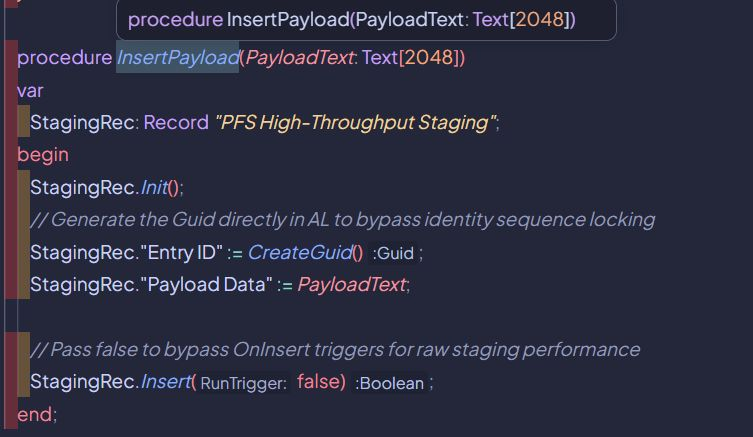
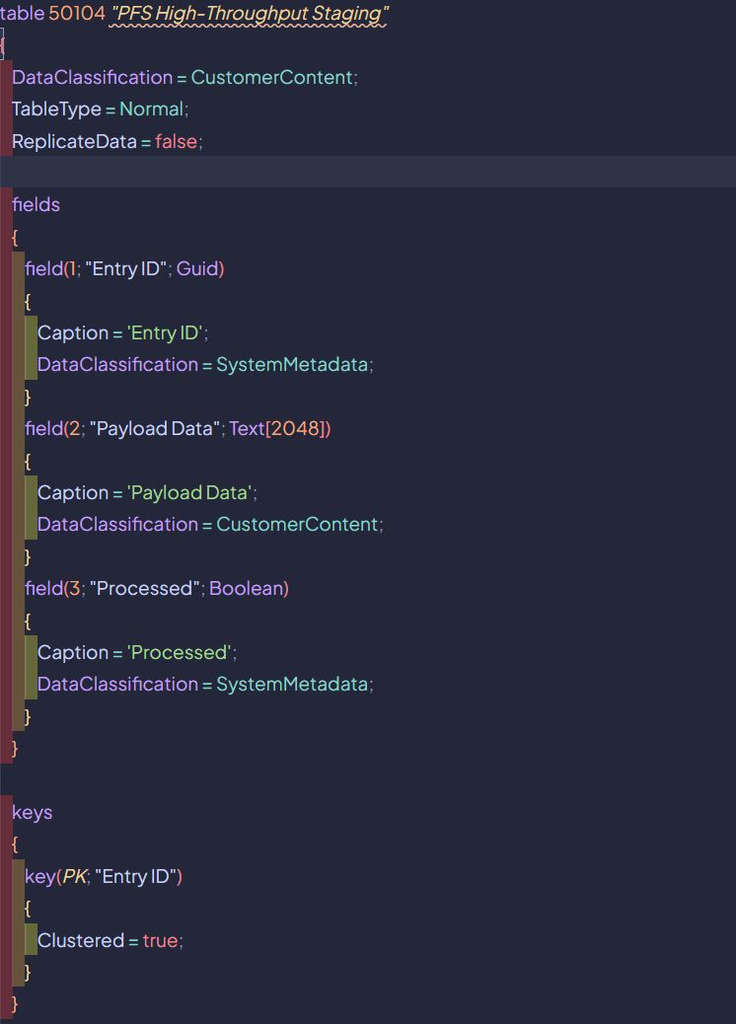
Instead of relying on the engine to calculate and sequence an auto incrementing integer key on insert, switch the primary key to a Guid and default it to SystemId (or assign CreateGuid()).
Technical Groundings
➡️ Saas Available: Yes
➡️ Runtime/Upgrade: Runtime
➡️ Bypasses Triggers: Passing false to Insert(false) bypasses table triggers for raw perfomance.
Why it matters
✅ Eliminates Key Contention: Multi threaded webhooks and API background workers insert simultaneously without waiting for an auto increment counter to release its lock.
✅ Scale Throughput: Scaling out API calls across multiple sessions delivers linear performance gains rather than exponential lock waits.
✅ Lower Telemetry Overhead: Prevents lock timeout noise (RT0012 signal) from flooding your Application Insights dashboard under heavy loads.
☣️ The Trap
Randomly generated Guid primary keys can cause SQL page splits over time if the table grows indefinitely without regular purging always pair this pattern with an automated retention policy or periodic bulk deletion cleanup.
💡 The Bottom Line
AutoIncrement serializes your pipeline, GUIDs and No. Series let it breathe.
How are you handling key generation in high volume staging tables; AutoIncrement, No. Series, or GUID PKs?