Don’t pass by reference unless you mean it.
Let’s talk about this simple mistake that can be misleading. The rule is that you only use VAR when you intend to modify the parameter.
Using VAR when you do not need it is like leaving your car running while you shop. wasteful and dangerous.
The problem
If you are not intentionally modifying the parameter avoid using var. It can mislead other developers thinking the values will be changed, and accidental modification can break the calling code.
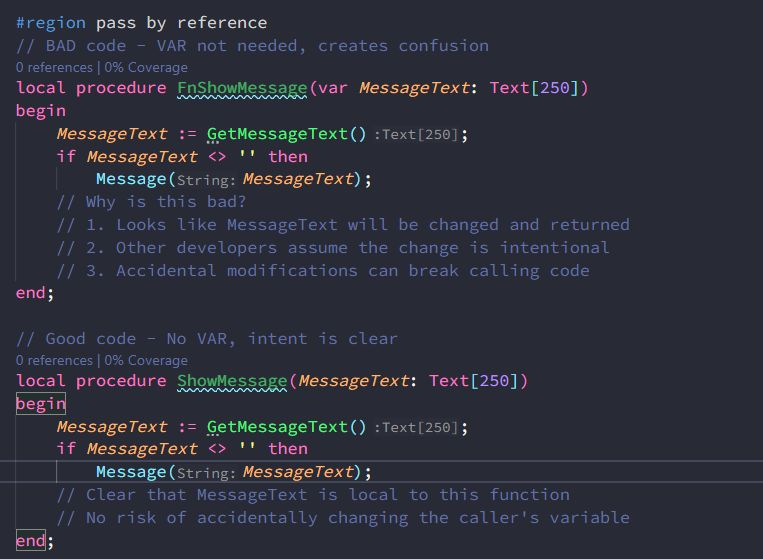
Before slapping VAR on a parameter, pause and ask yourself these questions:
➡️ Will I modify this value? – ✅ Use VAR
➡️ Am I returning data through it? – ✅ Use VAR
➡️ Is it a large record and I care about performance? – Maybe but add a comment
➡️ None of the above? – ❌ Skip VAR
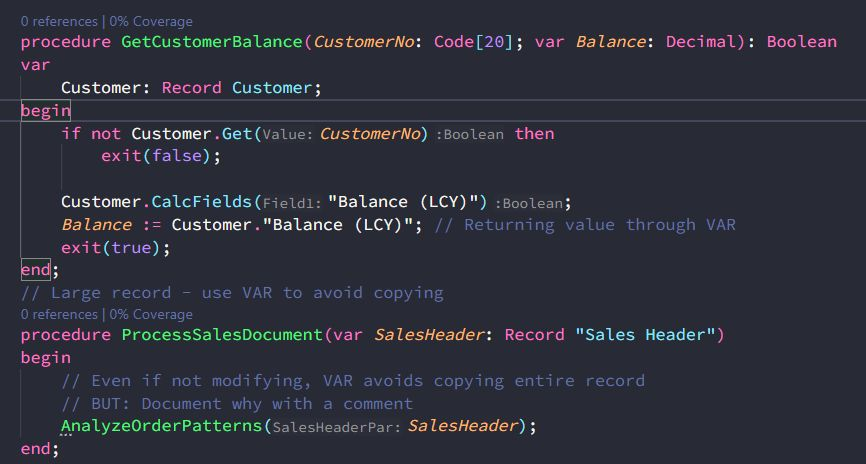
My mental model of the var parameter
Think of VAR like handing over your house keys vs. showing a photo.
With VAR – Here are my keys, feel free to rearrange the furniture.
Without VAR – Here’s a picture just admire it.
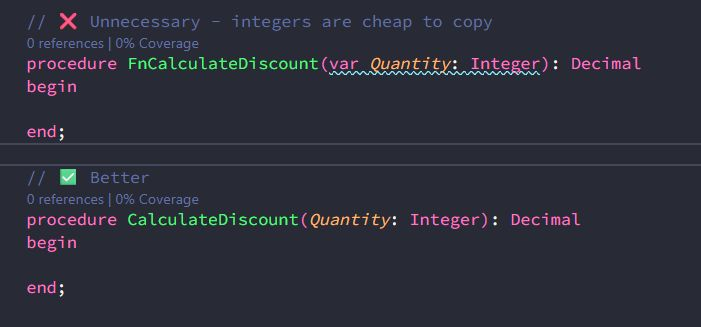
As a reviewer be careful of these patterns that often misuse VAR:
☑️ Functions that return Boolean but also use VAR
☑️ Validate procedures with VAR parameters
☑️ Calculate methods that don’t need to alter input
☑️ Get functions that don’t return anything through VAR
The bottom line
Using VAR is a promise that I’m going to change this, and you should expect it.
Don’t make promises you don’t intend to keep.
Use VAR with purpose. Your code will thank you.
🛠️ Challenge – Search your codebase for procedure and review each VAR parameter. How many are truly needed? Clean up the rest.