Generic data mapping engine built for a massive EDI integration.
The core mapper procedure used a Variant parameter so it could seamlessly accept records from any table schema. It looked like textbook abstract architecture.
During an overnight run processing 50,000 document lines, the tenant’s CPU utilization spiked to 100%, timing out every parallel job queue. Telemetry was not showing long SQL locks. It showed massive, compounding processing delays directly inside our middleware management codeunit.
⚠️ The Problem: The Runtime Type Evaluation Tax
While passing arguments via Variant gives your AL architecture great flexibility, it forces BC Service Tier to behave like a dynamically typed runtime environment. Every single time your code interacts with an downcasted variant variable, the system has to unpack the pointer, resolve the under the hood reference type, and dynamically generate metadata mappings at runtime.
🛠️ The Fix: Structural Inspection via Variant.IsRecord
Before you write a single line of mapping logic or pass a variant deeper into your application layers, you must introduce explicit structural guardrails. By combining the IsRecord property with immediate pointer assignment, you isolate type mapping to a single, lightning fast instruction.
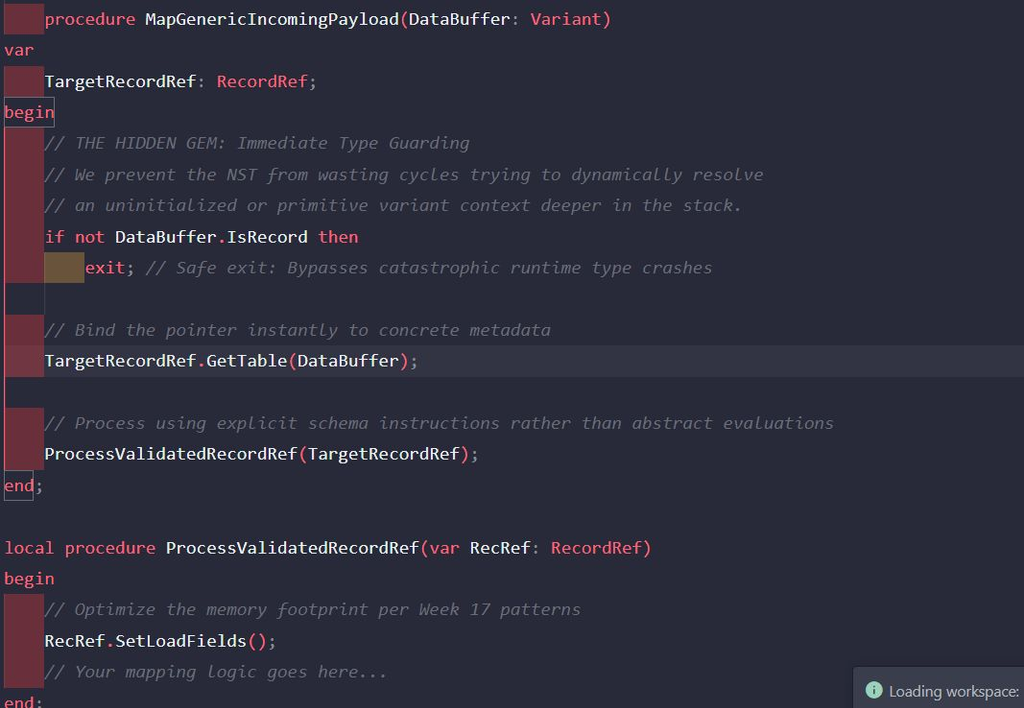
Why It Matters (The Senior Impact)
➡️ Optimized Compute Consumption: Eliminates speculative runtime type compilation, dropping Middle Tier CPU utilization during high-volume array processing.
➡️ Failsafe Integrations: Prevents uninitialized variants from bleeding into downstream functions where they turn into hard runtime type mismatch errors.
➡️ Predictable Architecture: Shifts your generic middleware patterns from risky dynamic evaluation to deterministic, guarded type validation.
☣️ The Trap: Remember that RecordRef variables passed into a variant do not automatically evaluate as true for IsRecord in older platform builds always verify if your variant contains a true Record instance or an uninstantiated reference wrapper.
💡 The Bottom Line: Guard.
A flexible architecture is brilliant, but only if it doesn’t leave your runtime engine guessing. Defensive guarding keeps your abstract frameworks lean and ultra performant.
Are you defensively checking variant types at the entry boundaries of your generic frameworks, or are you flying blind and praying the runtime resolves them correctly?